
What Is a Digital Human? Complete Guide for Brands (2026)
Updated: Sep 2

What is a digital human, and what can one actually do for a brand?
A digital human is a designed, computer-generated person that can look, move, speak, perform, or interact across digital channels. It may be a photorealistic 3D double, an original virtual character, a scripted presenter, a real-time conversational guide, or a public-facing virtual influencer. The defining idea is not simply a human-looking image. It is a reusable digital identity built to communicate consistently.
For brands, a digital human can become a spokesperson, educator, host, product demonstrator, social creator, event performer, or interactive assistant. The strongest projects combine believable craft with a clear business role, human oversight, audience transparency, and a production system that can scale. This guide answers the practical questions decision-makers ask before commissioning one.
Table of Contents
What is a digital human? A practical definition

A digital human is a visual, performable representation of a person or persona created with digital production technology. It can be based on a real performer, designed as an original character, or developed as a stylized brand personality. Its appearance may be two-dimensional or fully 3D, but a production-ready 3D digital human normally includes a model, textures, hair, clothing, a facial and body rig, and a repeatable method for movement and speech.
Mimic Influencer's virtual influencer services use 3D character creation, scanning, motion capture, animation, voice, storytelling, and interactive technology to turn that identity into audience-facing content. The result is more than a render. It is an asset that can be directed, updated, placed in new environments, and adapted to different formats without rebuilding the character every time.
The term overlaps with AI avatar, virtual human, digital double, synthetic presenter, and virtual influencer, but those labels describe different roles. A digital double recreates a specific person. A virtual influencer maintains a public persona and audience relationship. A conversational digital human can listen and respond in real time. One character may perform several of these roles, but the brief should define which capabilities matter.
A useful definition therefore has four parts: a recognizable visual identity, a way to perform, a communication role, and an operating system. Without the last two, a brand may own an impressive character model that has no reason to appear and no process for producing consistent content.
How does a digital human work?
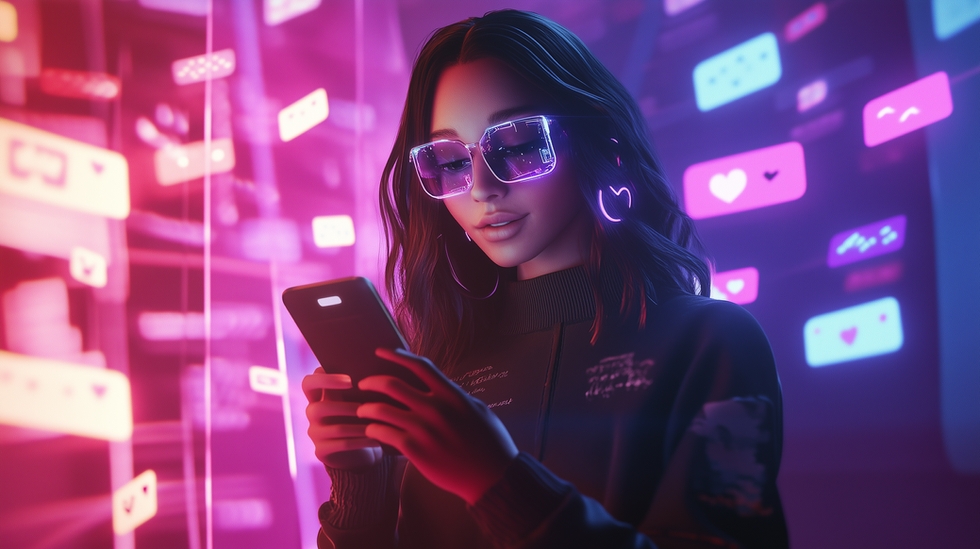
A digital human works as a coordinated stack of creative and technical layers. The visual layer defines face, body, skin, hair, wardrobe, proportions, and style. The performance layer controls facial expression, eye movement, lip sync, gesture, and body motion. The voice layer may use an actor, a licensed synthetic voice, or a hybrid system. The intelligence layer is optional: a character can deliver authored content without AI, or connect to conversational AI and approved knowledge for real-time interaction.
High-fidelity production often begins with 3D scanning and motion capture. Scanning captures geometry and surface detail; rigging makes the model controllable; motion capture transfers a performance; animation and look development refine what the camera sees. Real-time engines can then render the character for livestreams, events, AR, VR, and interactive installations.
Behind the visible character is a human-led workflow. Strategists decide the audience and objective. Writers shape the message and personality. Artists create and maintain the asset. Performers and animators give it life. Editors, brand reviewers, and legal teams approve outputs. Community managers and analysts learn from audience response. Automation can accelerate parts of this system, but accountability should remain clear.
For a deeper production view, see how AI influencers work and the virtual influencer production pipeline. Both show why a credible digital person is a managed media property, not an unsupervised tool that simply posts on its own.
Identity layer: design, backstory, values, visual rules, voice, and boundaries.
Performance layer: rigging, facial animation, motion capture, voice, and real-time control.
Content layer: scripts, environments, formats, channel adaptations, and calls to action.
Governance layer: permissions, rights, disclosures, approvals, moderation, and corrections.
Measurement layer: audience signals, funnel results, production efficiency, and long-term asset value.
Digital human vs avatar vs AI influencer: what is the difference?
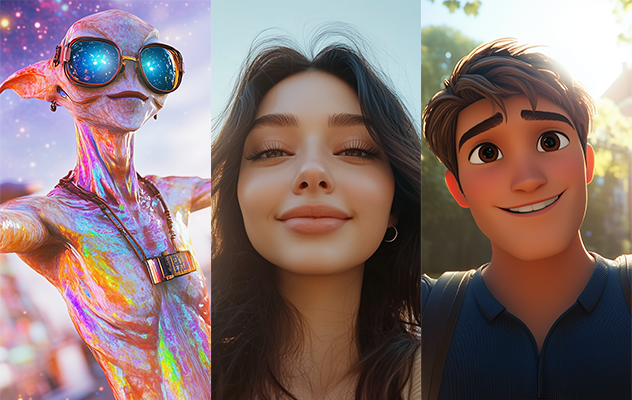
An avatar is the broadest term. It is any visual representation of a user, character, or organization in a digital environment. A profile icon, game character, cartoon mascot, and photorealistic 3D person can all be avatars. Many avatars are not built for performance, conversation, or sustained public communication.
A digital human emphasizes human-like appearance, behavior, or interaction. It may represent a real person or an invented persona. A digital double prioritizes likeness to a specific individual, while an original digital human can be designed around a brand's desired audience, tone, and visual world. Photorealism is optional: coherence and expressive quality matter more than realism alone.
A virtual or AI influencer is defined by its public role. It publishes content, develops a recognizable personality, and builds an audience relationship over time. AI may assist dialogue, voice, personalization, or production, but the character can still rely heavily on 3D craft, animation, performance capture, and human editorial direction. The complete AI influencer guide explains that broader operating model.
The right choice follows the job. Use a simple avatar when recognition is enough. Use a scripted digital presenter for repeatable video communication. Use a real-time digital human when visitors need to ask questions. Use a virtual influencer when the character needs an evolving identity, publishing cadence, and community. Use a digital double when likeness, continuity, or access to a particular person creates the value.
These categories can combine. A brand may launch one master 3D digital human as a social influencer, train it as an interactive event host, localize its voice for regional campaigns, and place it in AR product experiences. A modular asset and clearly negotiated rights make those extensions possible.
How do brands use digital humans?

Brands use digital humans wherever a recognizable, controllable presence can improve communication. In social media, a virtual personality can host recurring formats, demonstrate products, answer common questions, and carry a story across campaigns. At launches and exhibitions, the same character can appear on screens, in augmented reality, or as a real-time host. On websites, an interactive version can guide visitors through complex offers in a more embodied way than a conventional chat window.
The connected Mimicverse ecosystem shows how one digital identity can extend into conversational AI, XR, mobility, advertising, fashion, entertainment, training, and visual effects. This is strategically important: the character should not be limited by the first campaign if the brand expects to reuse it.
Common use cases include brand ambassadors, multilingual presenters, social creators, product educators, live-shopping hosts, virtual event performers, digital fashion models, onboarding guides, training characters, and immersive retail assistants. A digital human can also produce structured creative variations: different settings, wardrobes, languages, product configurations, and calls to action while preserving the same identity.
Control is a benefit, but it is not a substitute for authenticity. A digital character has no lived product experience and should not pretend otherwise. It is often effective for explanation, imagination, entertainment, and branded storytelling. A human creator may be better for personal testimony, sensitive topics, expert accountability, or communities built around genuine lived experience.
Brands should also plan disclosure and success measures before launch. The virtual influencer disclosure playbook covers transparency, while the content strategy guide connects persona design to useful formats and measurable performance.
How do you create a digital human for a brand?

Creation should begin with the business brief, not the face. Define the audience, problem, channels, campaign horizon, required interactions, realism level, languages, content volume, launch date, budget range, and success metrics. A social character, real-time sales guide, and cinematic digital double require different assets and workflows.
Next, build the persona system. Document the character's role, values, biography, tone, vocabulary, visual references, wardrobe logic, gestures, humor, opinions, boundaries, and relationship to the brand. This character bible is a practical production tool: writers, artists, performers, and community managers use it to make consistent decisions.
Visual development then moves through concept selection, modeling or scanning, texturing, hair and clothing, rigging, facial setup, look development, and performance tests. Teams should test the character in the actual delivery conditions. A face that looks convincing in a still portrait may need different detail, lighting, motion, or optimization for social video, mobile AR, a large event screen, or a real-time conversation.
Production readiness includes more than the model. Build approved environments, camera and lighting recipes, voice and pronunciation rules, caption standards, disclosure language, product-data sources, moderation rules, export specifications, and a library of expressions and motion. Confirm ownership and usage rights for the model, rig, source files, likeness, voice, performance data, training inputs, outputs, derivatives, markets, and duration.
A focused pilot is the safest next step. Produce a small set of representative assets, test audience comprehension and response, document revisions, and only then scale the channel plan. Mimic Influencer's agency selection guide helps teams compare partners on strategy, craft, rights, governance, and operating capability instead of judging a portfolio by attractive images alone.
Start with one specific communication job and a measurable audience outcome.
Choose stylized or photorealistic design according to context, not novelty.
Design rights, disclosure, approvals, and correction procedures before launch.
Test voice, motion, expression, lighting, and content together as one personality.
Measure both campaign performance and the economics of reusable assets.
Frequently asked questions
Is a digital human a real person?
A digital human is a digitally created or recreated representation. A real performer may contribute likeness, scanning, voice, motion, or acting, but the audience-facing character is a managed digital asset.
Is every digital human powered by AI?
No. A digital human can deliver scripted or performance-captured content without generative AI. AI becomes relevant when the system generates language, voice, behavior, personalization, or real-time responses.
What is the difference between a digital human and an avatar?
Avatar is a broad label for a digital representation. Digital human usually implies human-like appearance, movement, speech, performance, or interaction, often with a more complete production and identity system.
What is the difference between a digital human and a virtual influencer?
A digital human describes the asset or interface. A virtual influencer describes a public media role built around recurring content, personality, audience relationships, and campaigns. One character can be both.
Can a digital human talk in real time?
Yes, when it is connected to speech recognition, approved knowledge, conversational AI, voice synthesis, lip sync, animation, and a real-time rendering system. Human escalation and safety boundaries remain important.
How long does it take to create a digital human?
Timing depends on realism, likeness, scanning, hair and clothing complexity, rigging, voice, performance needs, environments, integrations, approvals, and launch content. A reusable real-time character requires more preparation than a single rendered image.
How much does a digital human cost?
There is no universal price. Scope may include strategy, design, scanning, modeling, rigging, animation, motion capture, voice, real-time integration, content, rights, localization, management, and maintenance. Compare quotes against identical deliverables and usage periods.
Can one digital human work across several markets?
Yes. A master character can be localized through language, voice, cultural context, styling, setting, offers, and schedules. Local reviewers should protect meaning and relevance rather than relying on direct translation alone.
Who owns a commissioned digital human?
The contract decides. Confirm ownership and licenses for the design, name, model, rig, source files, likeness, voice, motion, accounts, data, training inputs, finished content, derivatives, markets, and duration.
Should brands disclose that a digital human is virtual?
Clear disclosure is a strong trust practice, especially when the character could be mistaken for a real person or appears in sponsored content. Requirements vary by market and platform, so obtain current legal guidance.
Conclusion
A digital human is most valuable when it combines a memorable identity with a defined job, believable performance, repeatable production, transparent governance, and measurable outcomes. The technology can support social campaigns, product education, events, immersive experiences, localization, and real-time interaction, but strategy determines whether the result becomes a durable brand asset or a short-lived visual experiment.
Ready to explore a custom 3D digital human? Review Mimic Influencer's digital human and virtual influencer services or contact the Berlin studio to discuss your audience, channels, character role, production requirements, and pilot.
Related reading: what a virtual influencer is


Comments