
What Is an AI Influencer? A Complete Guide for Brands
Updated: Sep 2

What is an AI influencer, and how can a brand use one without losing authenticity?
An AI influencer is a digitally created personality designed to communicate, entertain, and represent ideas or brands across social platforms. Unlike a one-off generated image, a successful virtual creator has a consistent appearance, voice, point of view, story, and publishing rhythm. The persona may be realistic, stylized, cartoon-like, or fantastical, but audiences should recognize the same character from one campaign to the next.
For brands, the opportunity is larger than novelty. A well-built character can become a controllable, scalable media asset for launches, social storytelling, localized campaigns, product demonstrations, virtual events, and interactive experiences. This guide answers the questions buyers ask most: what AI influencers are, how they work, where they add value, what they cost, and which safeguards support responsible use.
Table of Contents
What Is an AI Influencer?

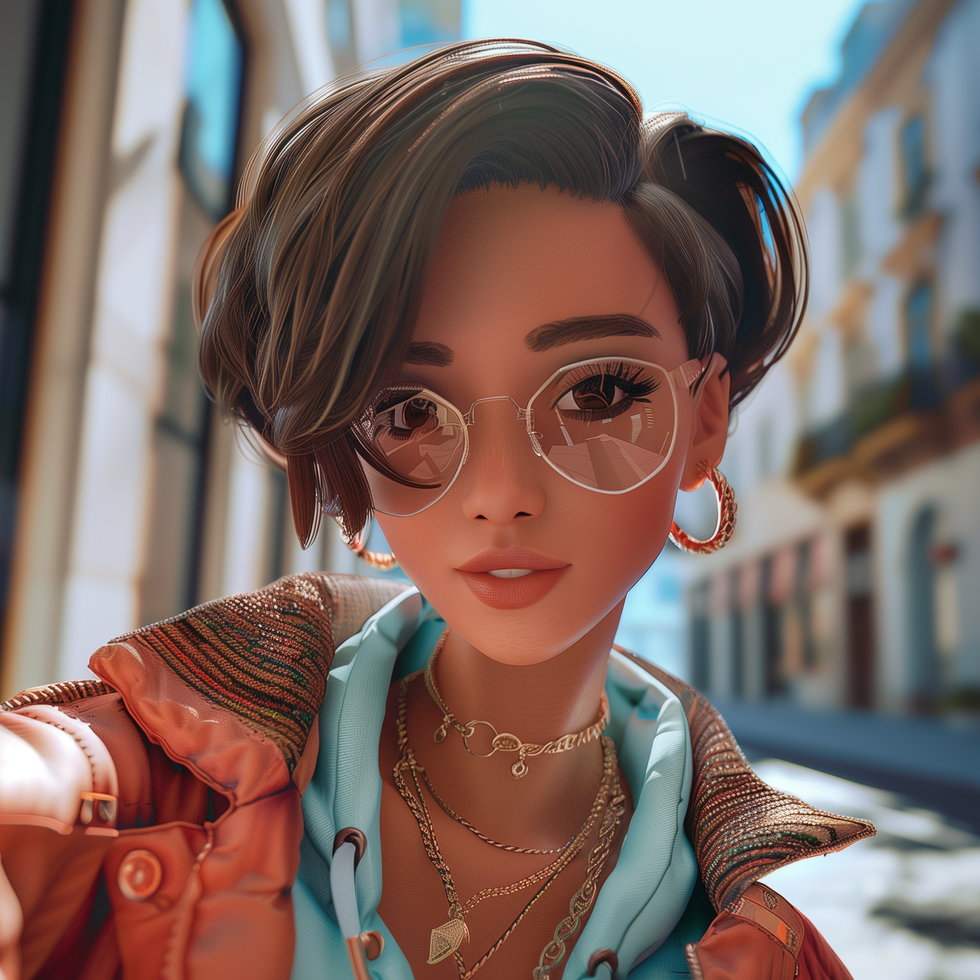
An AI influencer—also called a virtual influencer, digital influencer, or synthetic creator—is a fictional or digitally represented character that publishes content in a creator-like role. Production may combine 3D modeling, scanning, rigging, animation, motion capture, compositing, voice systems, and generative AI. Audiences experience the result as a recognizable personality with a coherent visual world and reason to follow.
The word “AI” does not mean a professional character operates without people. Human teams still set strategy, write or approve scripts, direct performances, check facts, protect rights, manage communities, and review outputs. Automation can accelerate ideation, dialogue, localization, and variations, but creative judgment and accountability remain essential.
Brands may choose a realistic digital human when premium presentation, human-scale emotion, or product demonstration matters. A stylized character can be stronger for memorability, humor, youth culture, or a distinctive universe. The correct style comes from the audience, platform, brand position, and story—not from choosing the most technically impressive face.
How Do AI Influencers Work?

AI influencers work through a repeatable character and content system. The team first defines who the persona is, what they care about, how they speak, what they never say, and why an audience should follow them. A character bible records features, proportions, wardrobe logic, color palette, language, humor, backstory, values, disclosure wording, and behavioral limits.
Consistency is both visual and narrative. If the face, voice, personality, or values drift between posts, the audience sees unrelated assets rather than one character. Strong teams therefore use approved references, reusable 3D assets, scene templates, voice rules, prompt controls, version management, and human quality checks. The goal is not to repeat every post, but to make every variation unmistakably belong to the same persona.
A production pipeline turns business goals into platform-ready assets. Strategy defines audience, offer, message, channel, and measurement. Writers develop concepts and scripts. Artists and technologists produce stills, animation, real-time performances, or interactive scenes. Brand, legal, and safety reviewers approve the work. Social managers publish and respond. Analytics guide the next creative cycle.
The most useful systems are modular. A master character can be adapted into campaign scenes, aspect ratios, languages, seasonal looks, and regional variations without rebuilding its identity each time. Yet automation should be proportional to risk: hero content, sensitive subjects, product claims, and live interactions require stronger human review than routine crops or format adaptations.
Why Do Brands Use AI Influencers?

Brands use AI influencers because they combine creator-style communication with the control of an owned character. The persona can appear when needed, enter environments that are difficult or expensive to film, and maintain a recognizable identity across channels. It can introduce products, host tutorials, perform in short videos, attend virtual events, or guide people through AR and immersive experiences.
Control does not guarantee attention. Audiences still ignore generic content. A brand needs a strong premise, emotional relevance, entertainment or utility, active community management, and clear disclosure. Measurement should connect content with qualified reach, watch time, saves, sentiment, brand lift, product interest, leads, sales, and reusable asset value—not follower counts alone.
Ownable and recognizable character identity across campaigns
Flexible output for stills, video, real-time, AR, VR, and events
Adaptation into formats, languages, markets, and seasonal concepts
Controlled messaging, environments, wardrobe, and product presentation
Long-term asset value when files, rights, and workflows are properly governed
How Is an AI Influencer Created?

Creating an AI influencer starts with a business question, not an image prompt. What should the character help the audience understand, feel, or do? Which audience tension can it address better than a conventional brand account? A useful brief names the market, channels, objective, brand personality, content formats, cadence, legal constraints, and success measures. It also explains why this character deserves to exist.
Character strategy develops the persona’s role, values, backstory, motivations, tone, relationships, visual references, and connection to the brand. The concept should be specific enough to remember but flexible enough to sustain many stories. A fashion explorer, product expert, coach, host, or animated mascot creates different audience expectations and content possibilities.
A launch plan then creates a content bank, approval workflow, disclosure language, community rules, account security, and measurement dashboard. A focused pilot should test recognition, creative quality, workflow reliability, production speed, audience response, and conversion signals before a large recurring calendar.
How Much Does an AI Influencer Cost?
There is no universal AI influencer price because the term covers very different scopes. A short still-image pilot is not comparable to a production-ready 3D digital human with custom rigging, motion capture, licensed voice, multiple wardrobes, real-time performance, interactive deployment, source-file delivery, and ongoing social content.
Budget is shaped by strategy, design originality, realism, technical complexity, asset ownership, content volume, formats, languages, environments, animation quality, voice, community management, approvals, and duration. Photorealism may require detailed modeling, materials, lighting, hair, facial motion, and rendering. Real-time or immersive use adds optimization and integration.
A proposal should separate one-time character development from recurring content production. It should specify deliverables, revisions, files, platform formats, usage period, territories, exclusivity, likeness and voice rights, data handling, disclosure responsibilities, maintenance, and what happens when the partnership ends. These details make offers comparable and protect long-term asset value.
A focused pilot is often the safest investment: one audience, one objective, a defined set of hero assets and adaptations, and an agreed measurement window. The pilot reveals whether the idea earns attention, whether production is dependable, and which capabilities justify investment at scale.
What About Ethics, Disclosure, and Brand Safety?

Trust is essential. Audiences should understand when a personality is virtual and when content is sponsored. Disclosure should be clear, prominent, consistent, and appropriate to the platform and market. It should not be buried in a profile, disguised among hashtags, or phrased so vaguely that an ordinary viewer could misunderstand what they are seeing.
Brands need documented rights for every ingredient: character design, images, scans, performers, motion data, music, fonts, environments, products, voice, likeness, and training or reference material. If a real person’s face, body, voice, or performance informs the character, consent and contracts should define permitted use. Teams should avoid impersonation, deceptive testimonials, and false claims.
Governance assigns responsibility for scripts, claims, cultural review, account access, audience moderation, asset provenance, corrections, and crisis response. Live and conversational experiences need stronger escalation controls because possible outputs are broader. Regulated or sensitive categories may require specialist legal and subject-matter review.
Frequently Asked Questions
Is an AI influencer a real person?
Usually no. It is a digitally created or represented character managed through a human-led process. A performer may contribute motion, voice, scanning, or acting, but the public persona is the designed character.
What is the difference between an AI influencer and a virtual influencer?
The terms overlap. “Virtual influencer” emphasizes the digital character; “AI influencer” often highlights AI used for creation, dialogue, automation, or personalization. Professional work can combine 3D, animation, motion capture, AI, and human direction.
Can an AI influencer make videos?
Yes. Depending on the system, the character can appear in rendered video, composited scenes, motion-captured performances, tutorials, short social clips, livestreams, AR experiences, and real-time interactive content.
Do AI influencers need disclosure?
Clear disclosure is a strong trust practice, and sponsored content may be subject to platform and market-specific rules. Brands should obtain appropriate legal guidance and make disclosures easy for ordinary viewers to understand.
Can one virtual influencer represent several markets?
Yes. A master character can be localized through language, voice, cultural context, styling, setting, offers, and schedules. People who understand each market should review localization.
How long does AI influencer creation take?
Timing depends on scope. A limited visual pilot is faster than a photorealistic, fully rigged, real-time character with wardrobes, voice, environments, governance, and a launch content library.
How do brands measure success?
Match metrics to the objective: qualified reach, watch time, saves, sentiment, clicks, leads, conversions, brand lift, production efficiency, content reuse, and long-term asset value.
Can an AI influencer replace a human influencer?
It can replace some use cases, but not human lived experience or established community relationships. Many brands use virtual and human creators for complementary roles.
Who owns an AI influencer?
Contracts determine ownership. Clarify rights to the design, model, rig, source files, voice, motion, outputs, accounts, data, and future modifications before production begins.
How should a brand begin?
Start with a brief covering audience, objective, channels, character role, style, formats, duration, rights, disclosure, and success metrics. Use a focused pilot before scaling.
Is an AI Influencer Right for Your Brand?
An AI influencer is most valuable when a brand needs a distinctive long-term character, repeatable storytelling, controlled production, global adaptability, or a bridge into interactive experiences. It is less useful when there is no clear audience role, content plan, or commitment to transparency. Technology makes the character possible; strategy, craft, consistency, and governance make it worth following.
Related reading: augmented reality insights · AR marketing and product exploration


Comments